You cannot name your baby anything you want. In New Zealand the registrar rejects the name Justice more than any other. Sweden once refused a name spelled Brfxxccxxmnpcccclllmmnprxvclmnckssqlbb11116, which the protesting parents insisted was pronounced Albin. And in California, the name José cannot appear on a birth certificate with its accent, because the state’s records system only accepts the 26 letters of the English alphabet.
Naming laws exist for four reasons, and almost every banned name on earth falls under one of them: protecting the child from ridicule, preventing confusion with official titles, preserving the local language, and the unglamorous fourth reason, government computer systems that cannot process symbols.
United States: Freer Than Almost Anywhere, With Exceptions
There is no federal list of banned names; each state sets its own rules, and most only regulate format rather than meaning. The common restrictions: no numerals or symbols, character limits in some states, and obscenity bans in states like California and New Jersey. Kentucky is famously close to rule-free.
The best-documented cases:
- A North Dakota court rejected the name 1069 back in 1976, and numerals have been the clearest no across states ever since. When Elon Musk named his son X Æ A-12, California’s alphabet-only rule forced the change to X Æ A-XII, spelling the number as Roman numerals.
- Names US courts and registrars have rejected include King, Queen, Majesty, Jesus Christ, Santa Claus, and Adolf Hitler. A Tennessee judge once ordered a baby named Messiah to be renamed; that decision was overturned on appeal, which tells you how contested the line is.
- The Social Security system itself rejects placeholder names like Baby, Infant, and Noname as invalid entries.
- Hawaii and Alaska carve out exceptions allowing traditional characters used in Kānaka ʻŌiwi and Iñupiaq names, a rare case of the rules bending toward culture instead of software.
New Zealand: The Yearly Rejection List
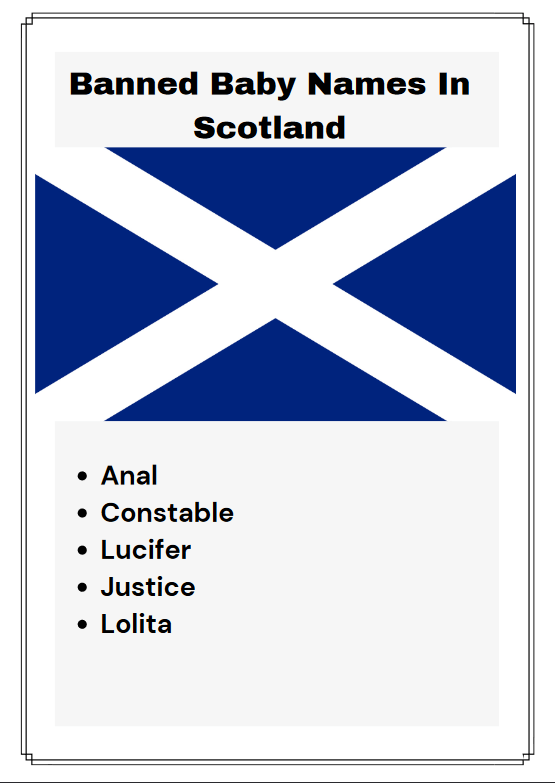
New Zealand law blocks names that could offend a reasonable person, are unreasonably long, or resemble an official title or rank, and the registrar publishes rejections. Justice tops the list most years. The famous cases: a nine-year-old named Talula Does the Hula From Hawaii was placed under court guardianship so her name could be changed, and rejected applications have included Sex Fruit, Fish and Chips, Number 16 Bus Shelter, Violence, Lucifer, and V8.
Sweden: Approval Required Within Three Months
Sweden’s naming law dates to 1982, originally written to stop commoners from taking noble names. Parents must submit the chosen name to the tax agency, which has rejected Superman, Metallica, Ikea, Elvis, and the 43-character protest name from the introduction.
The Approved-List Countries: Iceland, Denmark, Hungary, Portugal
Several countries flip the logic: instead of banning bad names, they pre-approve acceptable ones.
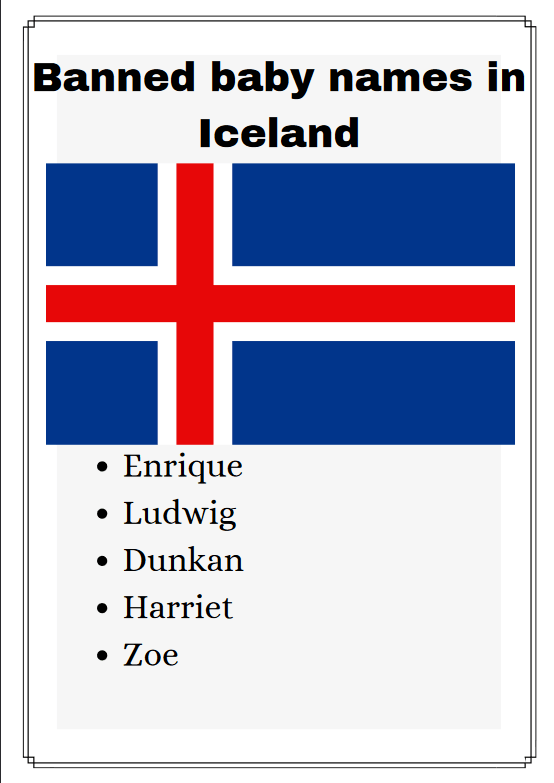
- Iceland requires names to fit Icelandic grammar and its alphabet; a naming committee rules on anything not already on the register.
- Denmark keeps an official list; parents wanting something else must apply. Rejections have included Pluto and Monkey.
- Hungary works from an approved list, with a review process for new names that often ends in denial.
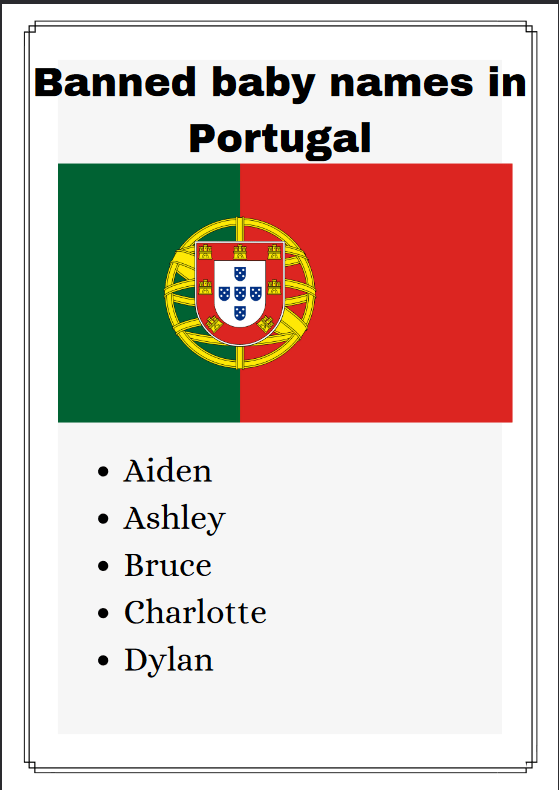
- Portugal requires traditionally Portuguese names in their full form. Thomas gets rejected; Tomás is fine. The government maintains a running list of admitted and non-admitted names.
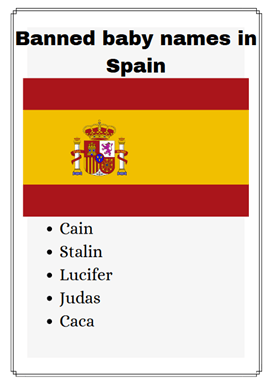
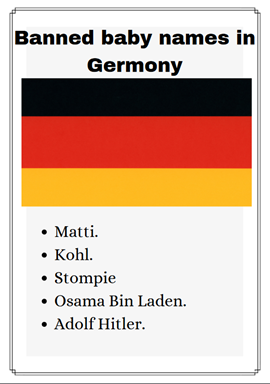
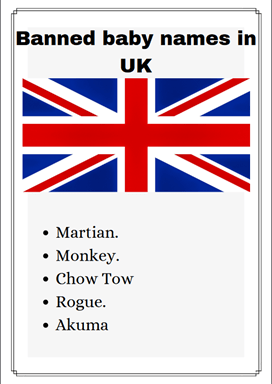
The Best-Interest Countries: France, Germany, Switzerland, Italy
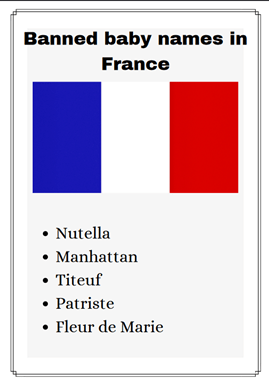
These countries let parents choose freely but empower registrars to object when a name could harm the child. France’s most famous case: a court blocked Nutella in 2015 and renamed the child Ella. Germany rejects names likely to harm the child’s welfare, and traditionally expected first names to indicate gender, a rule that has loosened over time. Switzerland has refused Judas, Lucifer, and Mercedes. An Italian court once blocked parents from naming their son Venerdì, Friday, reasoning the Robinson Crusoe association would invite mockery.
Quick Hits From the Rest of the World
- Argentina: provincial registries review names; Santa Fe province has blocked Messi as a first name to stop a flood of them.
- Malaysia: national guidelines reject names based on animals, fruits, vegetables, and insults.
- Indonesia: a 2022 regulation requires names in Latin script, at least two words, and no more than 60 characters.
- United Kingdom and Australia: among the most liberal. UK registrars intervene only over obscenity, misleading titles, or unusable formatting; Australian registries similarly reject official titles and offensive or unpronounceable names but otherwise leave parents alone.
What This Means If You Are Inventing a Name
Blended and invented names are legal in the places most of our readers live. The US, UK, and Australia will register an original name without blinking, provided it uses standard letters and is not obscene or a title. If you are outside those countries, check whether yours runs an approved list before falling in love with an invention.
That is worth knowing because combining two names is the most popular way to create an original one, blending both parents’ names into something no popularity chart has touched. Our baby name combiner generates those blends instantly, and every result is made of ordinary letters, which keeps it on the right side of even the stricter formatting rules.
FAQ
Is it illegal to name your baby anything in the US?
Almost anything goes, but not everything. States reject numerals, symbols, obscenities, and in some states overly long names, and courts have blocked titles like King, Queen, and Majesty. Rules vary by state.
Which country has the strictest baby naming laws?
The approved-list countries are the strictest by design: Iceland, Denmark, Hungary, and Portugal all require names to come from or be added to an official register. Sweden’s approval system is close behind.
Is Lucifer a banned baby name?
It has been rejected in New Zealand and Switzerland, among others. In the US it is generally registrable, which says a lot about the difference in approach.
Can I legally invent a completely new name for my baby?
In the US, UK, and Australia, yes, as long as it uses standard letters and is not obscene or a title. Blended names built from the parents’ names are a common and fully legal way to do it.